Blogs
Articles

7 Sales Tactics To Help Your Business in 2026
Sales tactics have evolved since 81% of buyers now research products before they contact sales representatives. The strategies that worked yesterday might not deliver results tomorrow in today's competitive marketplace.
Research shows that 92% of consumers trust referrals from people they know. Sales methods need to adapt therefore. Strong customer relationships and increased word-of-mouth referrals emerge from effective sales techniques. McKinsey's research reveals that strategic sales tactics such as upselling and cross-selling boost sales by up to 20% and revenue by up to 30%.
We have gathered 7 powerful sales tactics that will drive your business success in 2026. These strategies are not just theories they are proven approaches that work in today's buying environment. These tactics will give you the competitive edge you need to refine your existing sales strategies or reshape your approach completely.
What are top 7 sales tactics in 2026?
Companies that treat sales as continuous learning will thrive in 2026. They create cultures where coaching matters more than pressure. These organizations design for agility rather than perfection and see AI as a partner in human connection.
Tactic 1: Start with active listening to understand buyer needs
Active listening is the life-blood of effective selling in 2026. Studies show that top sales performers talk less and listen more, with a talk-to-listen ratio of 43:57. This helps them sell 120% above quota. This radical alteration from pitching to understanding buyer needs forms the foundation for all other sales tactics.
Why listening matters more than pitching
Active listening means you listen to understand rather than waiting for your turn to speak. This key difference turns ordinary conversations into meaningful exchanges that build trust and credibility. Research shows that 69% of buyers expect sales representatives to listen to their needs first. Yet this is the trait buyers say they see least often in salespeople.
Prioritizing listening does more than make prospects feel good. Active listening:
Builds rapport - People appreciate being heard, especially during important business decisions
Establishes control - You can adjust tactics live by focusing on the conversation instead of your pitch
Creates trust - B2B purchases affect buyers' careers, and they trust only those who understand their challenges
Here's something to think about: You show that relationships matter more than sales when you focus on understanding instead of rushing to present solutions. This buyer-first approach sets top performers apart from average ones.
How to ask the right questions
Good listening starts with questions that encourage prospects to share meaningful information. You can uncover business value that motivates action with three types of strategic questions:
Open-ended questions - These are a great way to get prospects talking about their situation
Probing questions - Guide buyers to find their top priorities themselves
Confirming questions - Verify the shared information to ensure mutual understanding
The best approach needs 5-10 thoughtful questions. These help identify problems on the prospect's radar, how these issues affect their business, and unique solutions your company offers. On top of that, follow-up questions show your interest and desire to understand completely.
Unlike traditional sales approaches, you shouldn't push toward your pitch but let prospects lead. A sales coach puts it well: you want prospects to ask, "Is that something you can help me with?"
Reading between the lines: verbal and nonverbal cues
Prospects communicate through non-verbal signals even when they don't state their thoughts directly. Research shows that eye contact between 60-70% of the time builds optimal rapport. People who like or agree with you naturally increase their eye contact duration.
Watch for these telling signals:
Facial expressions - Agreement shows in smiling and nodding; disagreement appears as compressed lips, lowered eyebrows, or a tense mouth
Body positioning - Open arms indicate receptivity, while turned shoulders signal disengagement
Mirroring behavior - Prospects who mirror your posture or gestures likely agree with you
Video calls play a vital role in remote selling because they let you observe these important visual cues. You miss valuable information that could help address concerns before they become objections without seeing the prospect.
The most valuable insights come from both what people say and how they express it. You'll position yourself as a trusted advisor rather than just another salesperson by mastering both verbal and nonverbal signals.
Tactic 2: Use storytelling to build emotional connection
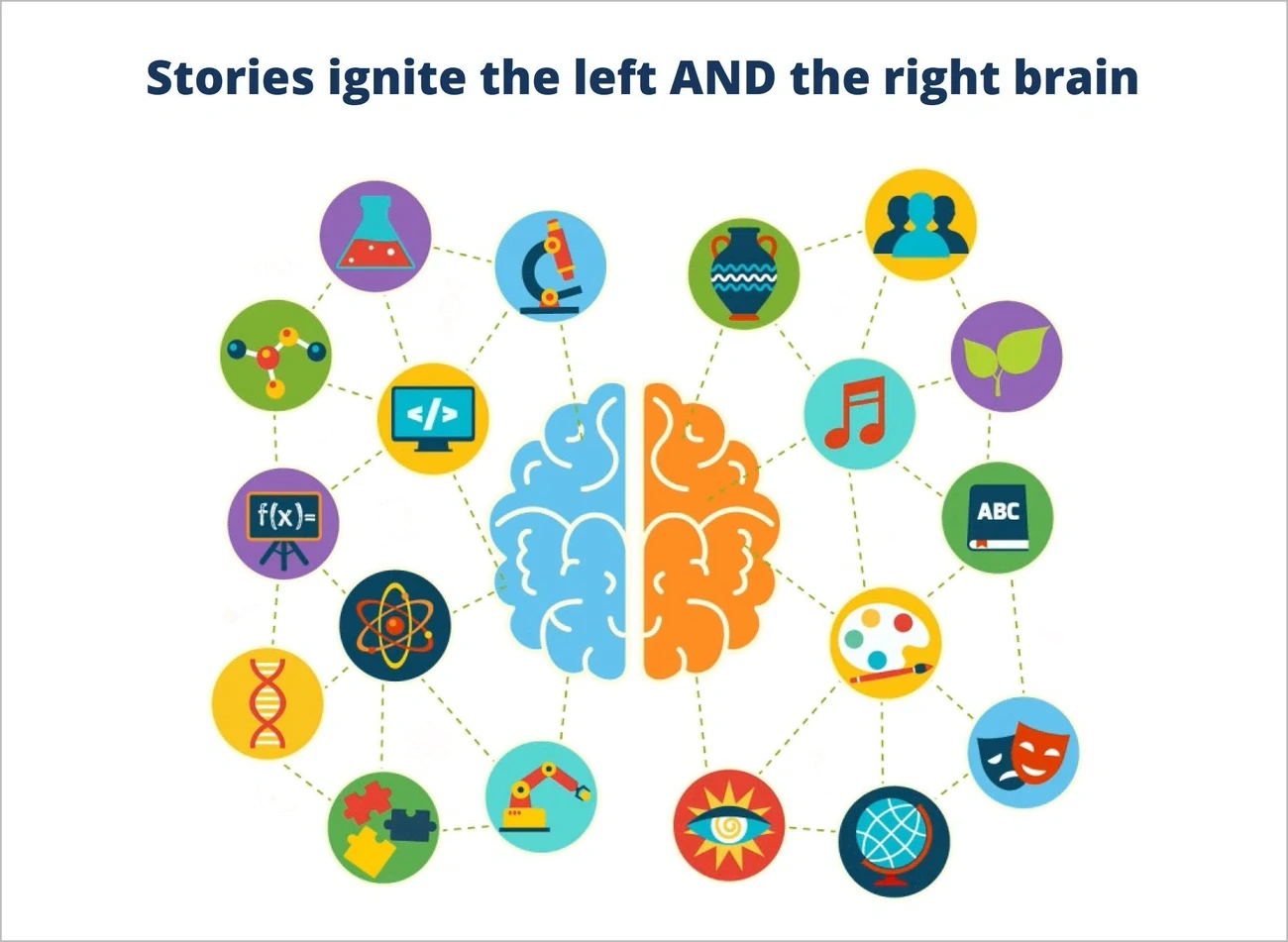
Storytelling is one of your most powerful sales tools. Research shows 80% of consumers value brands that tell stories. Your ability to craft compelling narratives will be vital for sales success in 2026. A good story can turn basic features and data into an emotional experience that stays with prospects long after your meeting.
What makes a good sales story
The best sales stories follow clear patterns that guide prospects through their experience. Sales professionals use frameworks like EPIC (Engage, Problem, Impact, Change) or SCIPAB (Situation, Complication, Implication, Position, Action, Benefit) to show how their solutions solve specific challenges.
Your customer should be the hero of every story not your product or company. Your brand plays a vital supporting role by providing tools and helping save the day when needed. This shows prospects that their needs come first.
Details make your stories come alive. A sales expert puts it well: "Vague: 'One of my clients came to us frustrated because their online sales had plateaued.' Specific: 'A small wedding catering business owner called me after losing a big wedding to a competitor. Frantic, she explained that online sales had dropped 53% over the last month, despite spending $5,000 on a new landing page.'"
Emotions drive buying decisions. Research confirms that emotional responses to messages affect purchase decisions more than the actual content. Your stories should tap into feelings that match your prospect's situation.
Examples of sales strategies using storytelling
Customer success stories work best when tailored to your audience. To cite an instance, an IT company selling cybersecurity software might tell a story about "Smith & Associates," a mid-size law firm that thought they were too small for cybercriminals until a devastating breach cost them millions. This story taps into real fears without using scare tactics.
Personal stories create genuine connections that set you apart from others. Sales teams who share relevant experiences build trust and show empathy. These stories should be brief, genuine, and relate to the prospect's needs.
Company origin stories show your brand's human side and values. All the same, use them less often as they don't appeal as much as other stories. Keep them under a minute and share only when asked or when they support key points.
When to use stories in the sales process
Stories work well throughout the sales trip. During discovery calls, client anecdotes show you understand their challenges and can help solve them. Later on, stories help build trust and address concerns.
To cite an instance, when prospects worry about integration, you might say: "We actually had a Head of Marketing with the same fear. Like you, they were using five different tools for email marketing. What they found was that our solution was easy to integrate and allowed them to cancel three of their subscriptions."
Build a mental collection of customer stories sorted by pain points, objections, and results. This helps you share relevant examples naturally during talks. Combined with active listening, you'll become a trusted advisor instead of just another sales rep.
Once you become skilled at sales storytelling, you'll build emotional connections that data alone can't create—turning interested prospects into loyal customers.
Tactic 3: Leverage social proof with testimonials and case studies
Social proof has become the life-blood of successful selling. Studies show that 88% of consumers trust user reviews as much as personal recommendations. This psychological principle makes use of our natural tendency to follow others' decisions especially when today's buyers are skeptical.
Why social proof works
Trust and credibility are the foundations of any successful sale. Your potential buyers feel more confident about their purchase decisions when they see others having great experiences with your product. This confidence comes from basic human nature we naturally look at what others do to figure out what's right.
The numbers tell a compelling story about how well social proof works:
59% of consumers look at 2-3 review sites before they buy
Testimonials can boost sales page conversions by up to 34%
Websites with testimonials get 45% more traffic than those without
70% of people trust recommendations from strangers
This trust factor matters even more in B2B sales, where 29% of buyers say case studies are their most important research resource. Companies that use social proof well can cut their customer acquisition costs by 20-50% compared to other channels.
How to choose the right customer story?
You need to think over carefully when picking customer stories. A good starting point is to identify the challenges you want to highlight. One expert puts it this way: "Look for stories where customers achieved exceptional results, overcame tough challenges, or used your product in unique ways".
Here are key selection criteria:
Relevance: Pick stories that match your target audience's industry, size, and challenges
Performance: Showcase customers who got measurable results
Credibility: Use well-known brands when you can, but authentic stories matter more than big names
Diversity: Show different scenarios across various industries and applications
Look for "brand advocates" who get amazing results with your product. These happy customers usually provide the most powerful testimonials and case studies.
Sales tactics examples using metrics and ROI
Adding specific metrics to your social proof creates compelling sales tools. To cite an instance, see Cisco's case study about VTNZ, which clearly showed 20% cost savings through Cisco's services. This gives prospects a clear picture of what they could achieve.
Ring Logix showed how they helped Propel Technologies handle 95% of support tickets within minutes while offering prices 30% lower than competitors. These concrete numbers make abstract benefits real and convincing.
B2B buyers need detailed technical proof with measurable outcomes. Your case studies should follow this proven structure:
Problem/Challenge: Define the customer's problem clearly
Solution: Show how your product solved their challenge
Results: Share specific numbers and measurable outcomes
Customer Quote: Add a genuine statement from the customer
Video testimonials have ended up being the most effective sales tactics, with 79% of people watching them to learn about companies. Two-thirds of people say they're more likely to buy after seeing a video testimonial that shows how a solution helped someone like them.
When you add testimonials and case studies to your sales approach strategically, you create what one sales expert calls "proof that can't be replicated by competitors". This makes social proof more than just a good sales tactic it becomes one of your strongest competitive advantages.
Tactic 4: Personalize your outreach using CRM data
Customers expect personal attention from brands. Research shows 76% want to build close relationships through personalized interactions. Your bottom line benefits directly - 80% of people buy more after getting a personalized experience.
Using CRM to tailor your message
A Customer Relationship Management (CRM) system helps you personalize effectively. Sales teams can access a complete dashboard with vital data about prospects and customers. Your team can move past generic approaches by using:
Industry-specific challenges - Address pain points unique to each sector
Company size and goals - Match outreach to how organizations work and what they want
Previous interactions - Build on past conversations and website visits
Technology stack - Connect with their current tools and show integration benefits
The right CRM marketing platform transforms raw customer data into hundreds of live segments that update immediately. Your team can then communicate precisely across all customer touchpoints.
Avoiding generic pitches
Name-dropping in email subject lines isn't enough for true personalization. A sales expert puts it well: "It's a continuous outreach plan tailored to each prospect's wants, needs, and preferences".
Each prospect deserves at least one unique sentence in every message. Recent LinkedIn posts, company news, or industry updates show you've done your homework and care about their business.
People respond better to messages crafted just for them. Take time to review their LinkedIn profiles, social media activity, and public information. The extra effort pays off - personalized messages can boost responses by up to 50%.
Salesman tactics that feel personal
Smart sales teams balance automation with authenticity. Time your interactions well and make them relevant. Messages should connect to specific actions or information from prospects.
Did someone download your whitepaper? Send them a quick summary of key points or discuss the concepts they read. This builds rapport through meaningful exchanges instead of pushy sales tactics.
Your customers need to feel valued and heard. Data shows 71% of consumers hate impersonal interactions. Look at your CRM data to spot specific needs and challenges. Then position your solution as the natural fix to their problems.
Tactic 5: Use automation and AI to save time and boost accuracy
AI and automation will provide decisive competitive advantages by 2026. Sales representatives spend just 25% of their time selling according to research. Teams can double their selling time and achieve 30% higher win rates by using AI tools.
Best sales tactics using AI tools
Smart teams are using several AI-powered tactics to boost their sales:
Evidence-based extraction: AI tracks customer interactions through email, calendars, and collaboration tools without human input. This helps 44% of AI-using salespeople create tailored outreach messages efficiently.
Sales call improvement: AI tools study conversations and provide instant insights, highlight crucial moments, and detect patterns in buyer behavior. Nearly 45% of sales professionals use conversation intelligence to coach their teams.
Better workflows: AI will initiate 95% of seller research workflows by 2027, compared to less than 20% in 2024. Sales reps can now concentrate on activities that matter most instead of manual research.
Smart lead scoring: AI spots patterns in successful conversions to qualify leads automatically, boosting conversion rates by 30%. This helps 47% of sales professionals who use AI qualify leads better.
Examples of automation in prospecting
Smart automation turns time-consuming prospecting into strategic outreach:
Intelligent follow-ups: Smart systems send follow-up messages based on prospect actions. Research shows that responses within five minutes make conversions eight times more likely.
Meeting coordination: AI removes email back-and-forth by finding the best meeting times and syncing with calendars.
Website monitoring: AI watches visitor behavior and alerts sales reps instantly when quality leads appear.
Multi-channel outreach: Modern tools create unified campaigns that blend email and social media outreach.
You can explore Persana.ai to find AI-driven engagement tools for advanced personalization.
Avoiding over-automation: keeping the human touch
AI brings great benefits, but the human element remains vital:
Smart timing: Successful sales teams use AI to spot behavior signals that need human interaction.
Clear boundaries: Good implementation separates AI tasks (data entry, reminders, alerts) from human responsibilities (strategy, relationships).
Honest communication: Customers appreciate transparency about AI usage. Campaigns that acknowledge both AI's strengths and limits often appeal more to audiences.
Genuine connection: Outreach should feel authentic despite automation 71% of customers dislike impersonal interactions.
Successful organizations see AI as a tool that makes human connections stronger by handling routine work. This allows salespeople to focus on what truly matters building relationships.
Tactic 6: Follow up consistently and keep your promises
Becoming skilled at follow-up is what sets top performers apart from average salespeople. Studies show that 80% of sales require at least five follow-ups to close the deal. Almost half of sales professionals (48%) never follow up after their original contact.
Why follow-up is a good sales tactic?
The numbers paint a clear picture. Only 2% of sales close during the first interaction. This means you could miss 98% of your business without proper follow-up. Follow-up keeps you visible when prospects are ready to buy and shows your genuine interest in earning their business.
Follow-up goes beyond persistence. Each touchpoint is a chance to deliver value, address concerns, and guide prospects through their buying experience. Of course, this consistent contact helps establish you as a thoughtful partner rather than just another vendor pushing for a sale.
How to follow through without being pushy?
The perfect balance between persistence and pestering comes from these principles:
Be polite, persistent, and patient in every interaction
Confirm next steps at the end of each conversation to avoid ambiguity
Vary communication channels based on prospect priorities
Provide something valuable with each follow-up (relevant case study, industry insight)
Schedule calls at agreed-upon times (42% of people are more likely to buy this way)
Timing plays a crucial role. A gap of 2-3 days between original follow-ups works well. Then gradually extend the time between touches if you don't receive responses. This measured approach shows professionalism while respecting the prospect's time.
Avoiding aggressive sales tactics
Aggressive tactics damage your reputation and effectiveness. Repeatedly calling uninterested prospects or using hard-sell approaches don't work. In fact, 57% of people say they're more likely to purchase when salespeople don't apply pressure during follow-ups.
Customer trust is built on kept promises. Your ability to deliver on commitments both explicit and implied creates a sense of belonging and loyalty. Breaking promises spreads through negative word-of-mouth and can cause more damage than a direct negative experience.
Note that follow-up should add value, not seem desperate. Adding genuine value with each interaction positions you as a trusted advisor worthy of your prospect's business.
Tactic 7: Ask for referrals at the right time
The success of referral programs depends heavily on timing. Studies show that poor timing can derail even the best referral programs and hurt conversion rates. Trust and momentum are the two key ingredients that make referrals work.
When to ask for a referral
These moments work best to request referrals:
After successful delivery - The product arrival creates peak satisfaction
Following positive feedback - Customers give high ratings or NPS scores between 9-10
Post-milestone achievement - You help clients crack tough problems
After repeat purchases - Your brand has earned their trust
Within 30-45 days of purchase - You can tap into their early excitement
The post-renewal period gives you another great chance. A customer's decision to renew shows they're happy enough to recommend others.
How to make it easy for customers to refer?
Your referral success rates will jump when you make the process simple. Here's what works:
Give them ready-to-use messages they can forward to their network. This saves their time and keeps your message clear. Simple referral links or forms make sharing quick and easy.
A gentle follow-up after good experiences gets results. To name just one example, see what happens when you say: "I'm glad we could solve this for you. Do you know anyone else who might benefit from similar support?"
Incentives that work
The right rewards turn happy customers into brand champions. These incentives get results:
Rewards that benefit both sides - the referrer and their friend. Store credits push repeat purchases and boost customer value. PayPal cash rewards give instant gratification.
Research shows customers expect at least $21 or an 11% discount as a referral reward. The best rewards match your customer base's preferences - some value exclusive perks more than money.
Conclusion
Success in sales by 2026 will require a perfect blend of human touch and advanced technology. This piece explores seven powerful tactics that will revolutionize your sales results. Active listening builds meaningful relationships, while storytelling creates emotional bonds that numbers alone can't match. Case studies and testimonials provide social proof that makes buying decisions easier for prospects.
Your prospects feel valued when you craft personalized messages using CRM data, not just another target. AI and automation tools help your team skip administrative tasks and spend more time building relationships. Regular follow-ups show your reliability and dedication to solving customer problems. Smart timing of referral requests multiplies your sales opportunities through trusted connections.
Top-performing sales teams see these tactics as connected parts of a complete strategy. Companies looking to implement advanced personalization can check out Persana to streamline their process with AI-driven engagement features.
Note that sales excellence adapts continuously. The digital world will evolve past 2026, but core principles stay the same - understanding customers, building trust, and delivering real value. Teams that adopt new technology while maintaining authentic connections will outshine those stuck with old methods.
Sales success boils down to one truth: people buy from those they trust. These seven tactics help you earn that trust naturally and systematically, whatever changes occur in buying behaviors over time.
FAQ
People often ask me about the best ways to sell in today's market. Here are some common questions I get based on my experience.
What are tactics in sales?
Sales tactics are specific techniques that help move prospects through the buying process. These methods range from prospecting strategies to closing techniques that handle objections. Good tactics should line up with what customers need instead of pushing products they don't want. While strategies focus on long-term plans, tactics are the immediate actions that fit into these bigger plans.
What is a great but underrated sales tactic that works for you?
Question-based selling doesn't get enough credit despite its power. You build genuine trust by asking thoughtful, open-ended questions before jumping into your pitch. This helps you discover real needs. The right questions turn simple transactions into valuable consultations.
What is the most creative sales tactic you have seen implemented?
A software company's clever approach stands out. They sent prospects incomplete puzzles with a note saying "We have the missing piece to complete your business." This tangible metaphor sparked curiosity without being pushy. Another smart tactic involved sending tailored video messages that addressed specific challenges found through research. These messages got much better engagement than regular outreach.